Ditch the dinosaur gauges; modern metrology, modern accuracy.

Laser vs. X-Ray Thickness Gauges: Choosing the Right Technology

Techno Blog

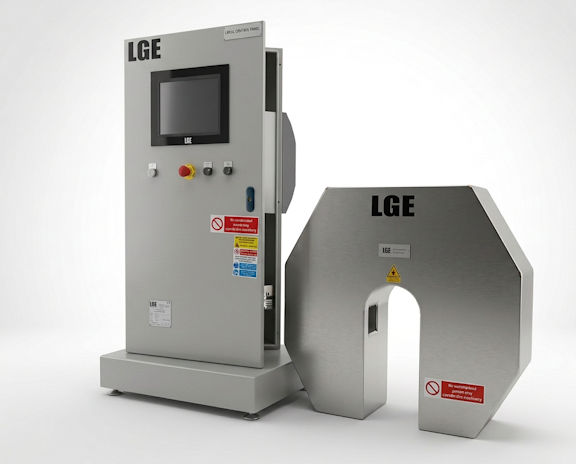
Selecting the optimal thickness measurement technology depends on material properties, line speed, environmental conditions, and accuracy requirements. This comprehensive guide compares laser triangulation, confocal chromatic, and X-ray transmission technologies to help you make an informed decision for your specific application. Laser sensors excel in measuring metals, ceramics, and opaque plastics. With sampling rates up to 10 kHz and resolutions down to 0.2 microns, they're ideal for high-speed rolling mills and real-time AGC feedback. However, they require a clean optical path and may struggle with transparent or highly reflective surfaces.
Read more

Confocal Laser Technology: Sub-Micron Thickness for Transparent and Multilayer Materials

Techno Blog

When measuring transparent films, glass, liquids, or multi-layer coatings, traditional laser triangulation fails due to surface penetration and multiple reflections. Confocal chromatic sensors solve this by using wavelength-coded light that focuses at different depths. Each layer reflects a specific wavelength, enabling simultaneous measurement of up to 4 layers with 10nm resolution - ideal for lithium-ion battery separators, optical coatings, and pharmaceutical blister films.

Read more

The Future of Precision Thickness Control in Smart Factories

Techno Blog

As manufacturing enters the era of AI-driven process optimization, non-contact thickness measurement has become the backbone of zero-defect production. Laser and X-ray gauges now integrate seamlessly with cloud-based analytics, enabling predictive quality control and unprecedented line efficiency. Modern thickness gauges reduce scrap by up to 35% and provide real-time feedback loops that self-correct rolling mill deviations before they become costly defects.

Read more

3D Shape Measurement for Pipes, Tubes and Structural Profiles 3D Metrology

Techno Blog

Roundness, ovality, straightness, and wall thickness variations are critical quality parameters for tubes, pipes, and structural profiles. Traditional contact gauges miss local defects. Our 3D laser triangulation systems capture the full 360° shape of moving products at line speeds up to 2 m/s, detecting diameter fluctuations, eccentricity, and surface anomalies in real time.

Read more

Why Buying a Thickness Gauge from a Sensor Maker Can Ruin Your Production Line

Techno Blog

In the world of industrial manufacturing, precision is profit. When a production manager needs to measure wall thickness-whether for pipe, tubing, sheet metal, or plastic extrusion-the instinct is often to go straight to the source. "Let's buy the gauge from the people who make the sensor," they think. Or perhaps, "We already use this software house for our MES; let them handle the thickness data." This logic seems sound. Sensors are the heart of measurement, and software is the brain. But in the harsh reality of a rolling mill or extrusion line, neither the sensor producer nor the software house alone can guarantee success. The missing ingredient? Process knowledge.

Read more

Intelligence Over Brute Force with smart systems

Techno Blog

Facing robotic guidance issues? From dimensional inconsistencies and positional drift to unpredictable center-of-gravity shifts and delicate part handling—we understand the complexity. If your robot struggles with variability, we can provide the precision you need

On the drawing board, robotic guidance is a matter of clean coordinates and predictable physics. On the factory floor, however, reality is far messier. If you are reading this, you have likely already discovered that your robot's performance degrades significantly when faced with the natural variability of real-world parts.

Read more